

You probably know the feeling when you really want something, but just can’t seem to get started. You want to eat healthier, exercise more often, or finally tackle that project close to your heart.
And yet, nothing happens.
At least not what you actually set out to do.
Instead, you scroll through Instagram, suddenly bake banana bread, or reorganize your bathroom cabinet.
And at some point you ask yourself: “Why can’t I do this? Why am I lacking motivation?”
I know that feeling. All too well.
Especially when the desire for change is there — but the path to it seems huge and overwhelming — we often lose momentum before we even get started.
What is self-motivation, anyway?
Self-motivation means motivating yourself to take action from within — without anyone pushing you or a deadline looming over you.
That sounds nice — but it’s often difficult. Especially when you’re tired, doubting yourself, or your head is just too full.
Self-motivation doesn’t come from pressure, but from a sense of purpose, clarity, and respect for yourself and your goals.
But that’s often where it gets tricky:
Between everyday life, doubts, and inner pressure, we can easily lose touch with ourselves — and with our motivation.
What helps me to keep going – even without motivation
Motivation isn’t always there. Sometimes you’re motivated, sometimes you’re not.
But if you want to get something done, you have to take action.
With or without motivation.
Easier said than done, I know.
But the good thing is: self-motivation isn’t something you’re born with. It is a skill and, like so many other things, you can learn and train it.
I too know those days when I don’t feel like doing anything and am anything but motivated,
but I have learned to deal with it.
That’s why I would like to share a few thoughts and tools that help me keep going – even when I don’t feel like it.
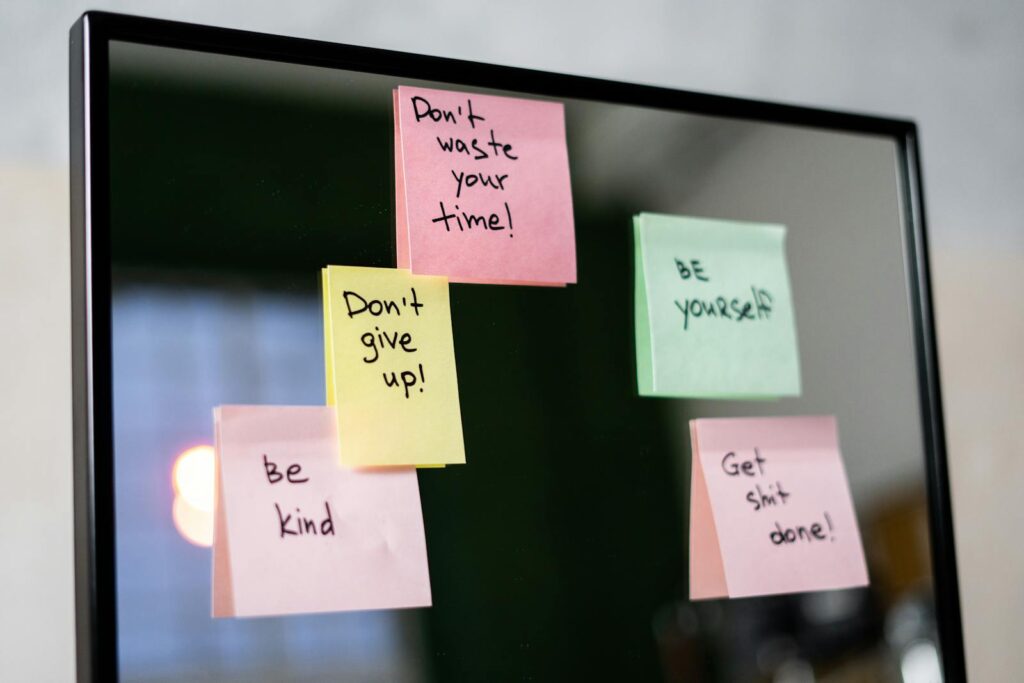
1. Ask yourself: What is blocking you right now?
If you find it difficult to motivate yourself, it’s not always due to a lack of discipline or willpower – it’s often due to inner blockages:
Perfectionism: You want to do it right – and don’t even start or don’t finish.
Overwhelm: You don’t know where to start – so you don’t start at all.
Self-doubt: A quiet voice whispers, “What if it doesn’t work out?”
Exhaustion: You want to so badly… but your body says, “Not today.” Sometimes you don’t need more to-do lists – you just need a real break. One where you’re not planning your next task.
Sometimes what you need is not more discipline, but more compassion for yourself.
Not more pressure, but more space to breathe.
It may be that you secretly don’t believe you can do it.
Perhaps you lack clarity — or simply energy.
Write down your thoughts and feelings.
An honest look inside yourself can often solve more than any to-do list.
2. Find your “why” – and remember it when you lack motivation
Sometimes we have so much to do that we forget the “why” – the reason why we started in the first place.
Whether it’s constant studying at university, household chores, living healthier, or self-actualization, it doesn’t matter.
But behind all of this is a why.
And even if it often gets lost in everyday life, it’s still there.
Ask yourself:
What is really behind your desire?
A new attitude towards life? More freedom? Being more yourself?
Your “why” is like an inner compass. It reminds you why you should keep going, even when you don’t feel like it.
Write down your “why” so that you can always remind yourself why it’s worth sticking with it.

3. Motivate yourself through visualization
Visualization is a great thing.
It can help you see your goals as if you had already achieved them. That changes something — not only in your head, but also with your feelings.
If you regularly imagine what it looks and feels like when you have achieved your goal, your subconscious will start to believe it.
And that is exactly what is so powerful.
Whether it’s a big goal or something small like a tidy apartment or a completed task:
What does the moment after look like?
How do you feel?
What is different then?
This inner image can help motivate you and get you going – especially on days when everything seems difficult.
If you want, you can also make your goals visible – e.g., with a vision board or through journaling.
Write down what you want, how it should feel, or what can change. This creates clarity and gives direction to your actions.
It’s not important how big your goal is – what matters is that you believe it’s possible.
And that it touches you deeply.
4. 3, 2, 1 – go! A simple technique for your starting moment
Sometimes, despite everything, you can’t get going, you sit on the sofa or at your desk, lost in thought, and just can’t get started.
In moments like these, a very simple technique helps me:
I count down in my head.
3… 2… 1… go.
And then I just start – without thinking any further.
Sounds simple? Yes, it is – but it’s effective. It’s about overcoming that one moment – the moment between “I should” and “I’m actually doing it.”
Just give it a try and see if you can motivate yourself that way.
You don’t always need a huge motivational boost – sometimes a countdown is enough to take the first step.
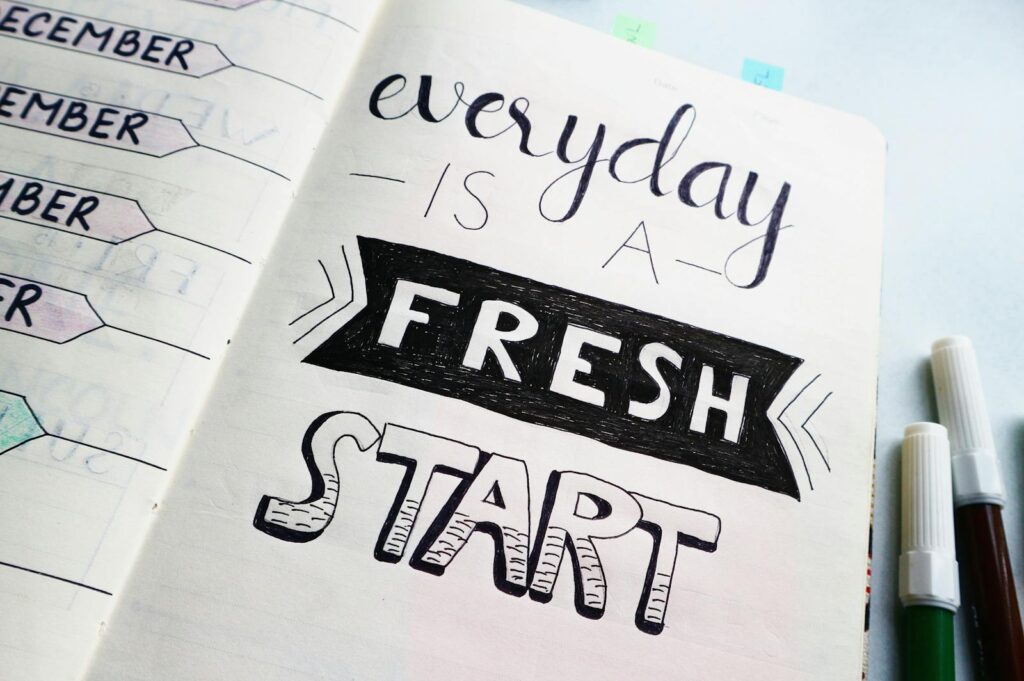
5. Make it easy to get started
Getting started is usually the hardest part. If you want to clean out and tidy up your entire house, it might be too much. You’d probably have to spend three whole days doing it, and just the thought of it is paralyzing. So you’d rather not do it at all.
But you don’t have to do everything at once.
For moments like these, I like to use the 5-minute method. I say to myself, “I’m just going to do this one thing for five minutes—and then I’ll stop.”
Usually, five minutes turns into more—but that’s not the real goal. The goal is to get started.
It doesn’t matter whether you plan for 5, 15, or 25 minutes, as with the Pomodoro Technique.
The important thing is that the starting point is small enough that you don’t put yourself off getting started.
Because most of the time, it’s that first step that holds us back – not the task itself.
6. Make big tasks easier – with the salami tactic
If a task overwhelms you, break it down into smaller steps.
When I was studying medicine, I was often overwhelmed by the sheer amount of material I had to memorize. I suffered from exam anxiety – at some point, I couldn’t take it anymore. So I sought help from a therapist.
One thing he said has stayed with me to this day – and I still repeat it to myself regularly:
“Use the salami tactic.”
Salami tactic? What does that mean?
It’s simple: just like with salami, you cut off one piece at a time. Step by step. Not all at once.
Today, when I feel overwhelmed again, I say to myself: “Salami tactic.”
And then I just take the next small step.
For example, say to yourself: “I’ll do this for 30 minutes – then I’ll stop.”
As I mentioned before: Getting started is often the hardest part. But once you’ve started, it’s easier to get into the flow.
You can also work with time blocks – for example, with the Pomodoro Technique: 25 minutes of focused work, 5 minutes of break. This creates structure – and you stay on track without overwhelming yourself.
Don’t forget the breaks – otherwise you’ll quickly burn out again.
7. Create a motivating environment
Your environment has an enormous influence on you. I don’t just mean your physical environment. We’ve all heard the advice to keep your desk tidy.
But it’s about more than that. It’s also about what you surround yourself with mentally.
Listen to podcasts, watch inspiring videos, read books that motivate you – or talk to people who build you up.
Surround yourself with things that strengthen you – inside and out.

8. Celebrate your progress – no matter how small
Even small steps are important. Self-motivation thrives on momentum – and that comes when you acknowledge yourself for what you have achieved. You don’t have to reach big milestones to be proud of yourself.
Use a success journal for this. I first heard about this when I read the book “The Laws of Winners.” In it, you write down all your successes, big or small. If you ever think you haven’t achieved anything yet, you can browse through it to remind yourself of how much you’ve already accomplished.
This helps you focus on what’s already there, and that’s exactly what strengthens your motivation.
9. Be guided by your best self
Everyone has their own idea of what their best self is like — how it thinks, feels, and acts. Unfortunately, we rarely act accordingly.
When I’m feeling unmotivated, I often ask myself what my best self would do right now. This works wonders. For me, this thought is one of the most helpful I have ever adopted. It motivates me to make progress, leave my comfort zone, and at the same time be understanding with myself, because that is exactly how my best self would act.
So ask yourself: What would my best self do right now?
I ask myself this every day—and it helps me stay focused.
Believe in yourself and just get started
Motivation doesn’t mean performing at your best every day. It means sticking with it – even when it’s hard.
I hope these thoughts and tips have helped you to boost your motivation a little – or at least to create some clarity.
All the best,
Liv